
2026-09-12 ·
Winterizing Outdoor Faucets Before Chicago's First Freeze
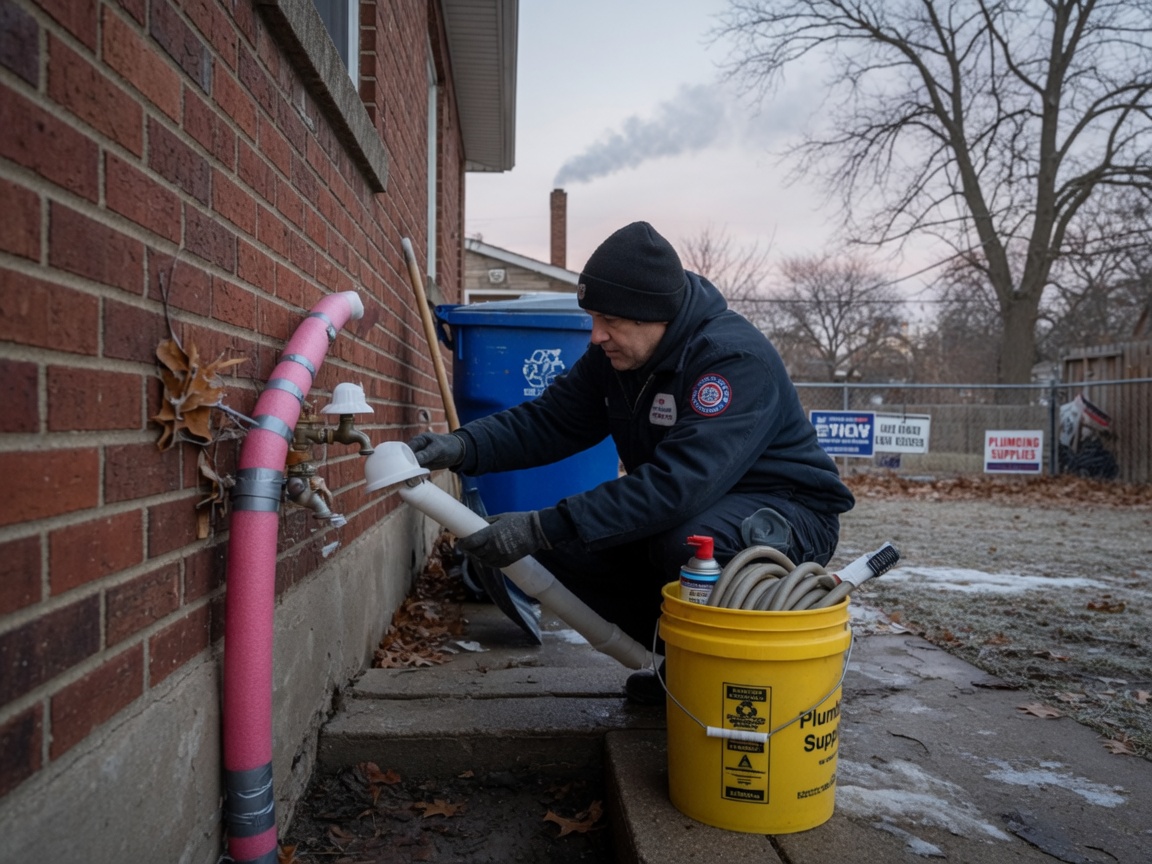
Finish winterizing outdoor faucets in Chicago by late October to beat the first freeze that often arrives in early November across Cook County. Older brick homes in neighborhoods like Lincoln Park, Wicker Park, and Logan Square have exposed hose bibs on 80- to 120-year-old foundations that sit close to grade, so even a single night below 28°F can split the valve or crack the supply line inside the wall. The humid continental climate brings rapid temperature drops after warm fall days, and wind off Lake Michigan accelerates heat loss around these fixtures.
Why Chicago's Climate and Housing Stock Make Timing Critical
Chicago's cold winters hit older housing stock hardest because many homes in Hyde Park, Bridgeport, and Pilsen still use galvanized or copper lines run through uninsulated exterior walls. Once winter temperatures drop, the ground around foundations stays frozen for weeks, keeping any trapped water under pressure. Properties near the Chicago Riverwalk or Navy Pier face extra wind exposure that pulls heat from pipes faster than inland blocks in Rogers Park or Andersonville. Waiting until after the first hard freeze often means dealing with burst lines that flood basements before a 24/7 emergency response team can reach the property.
Step-by-Step Winterizing Process for Local Homes
Shut off the interior valve that feeds each outdoor faucet, then open the exterior bib to drain remaining water. Attach a foam cover rated for at least -20°F or install a quarter-turn shutoff with a built-in drain if the line is accessible. In West Loop and South Loop row houses, check for shared walls where one unit's un-winterized faucet can affect the neighbor's supply. Test the interior shutoff by running water after closing it to confirm no drips remain. Homeowners in Evanston and Oak Park with newer construction still need to verify the valve location because builders sometimes place them behind finished basement ceilings.
Common Failures Seen in Lincoln Park and Logan Square
Many calls after the first freeze come from homes where the exterior bib was covered but the interior shutoff was never closed, leaving a column of water that expands and splits the pipe. In Uptown and Lakeview three-flats, shared laundry rooms often hide the main shutoffs behind stacked units, so residents miss them during quick prep. The Art Institute of Chicago area and Grant Park high-rises have different challenges because rooftop mechanical rooms feed exterior hose bibs that run down exterior walls exposed to Soldier Field winds. These lines require an extra layer of pipe insulation wrapped all the way to the first interior elbow.
When Professional Help Prevents Costly Damage
If an outdoor faucet lacks an accessible interior shutoff or shows signs of prior leaks, burst pipe repair becomes necessary before winter. Technicians familiar with Cook County plumbing can install a new frost-proof sillcock or add a dedicated shutoff in under two hours on most single-family homes. Properties in Pilsen and Bridgeport with cast-iron stacks sometimes need the line rerouted slightly to clear the foundation wall. For readers dealing with repeated issues, the guide on what to do when sewage backs up during heavy Chicago storms explains how frozen exterior lines can contribute to basement backups.
Speedy Plumbing Chicago maintains 24/7 emergency response for any frozen line that slips past winter prep. Homeowners who complete these steps each fall avoid the majority of after-hours calls that spike once temperatures stay below freezing for more than 48 hours.