
2026-09-12 ·
When to Call for Sump Pump Failure After Chicago Rain
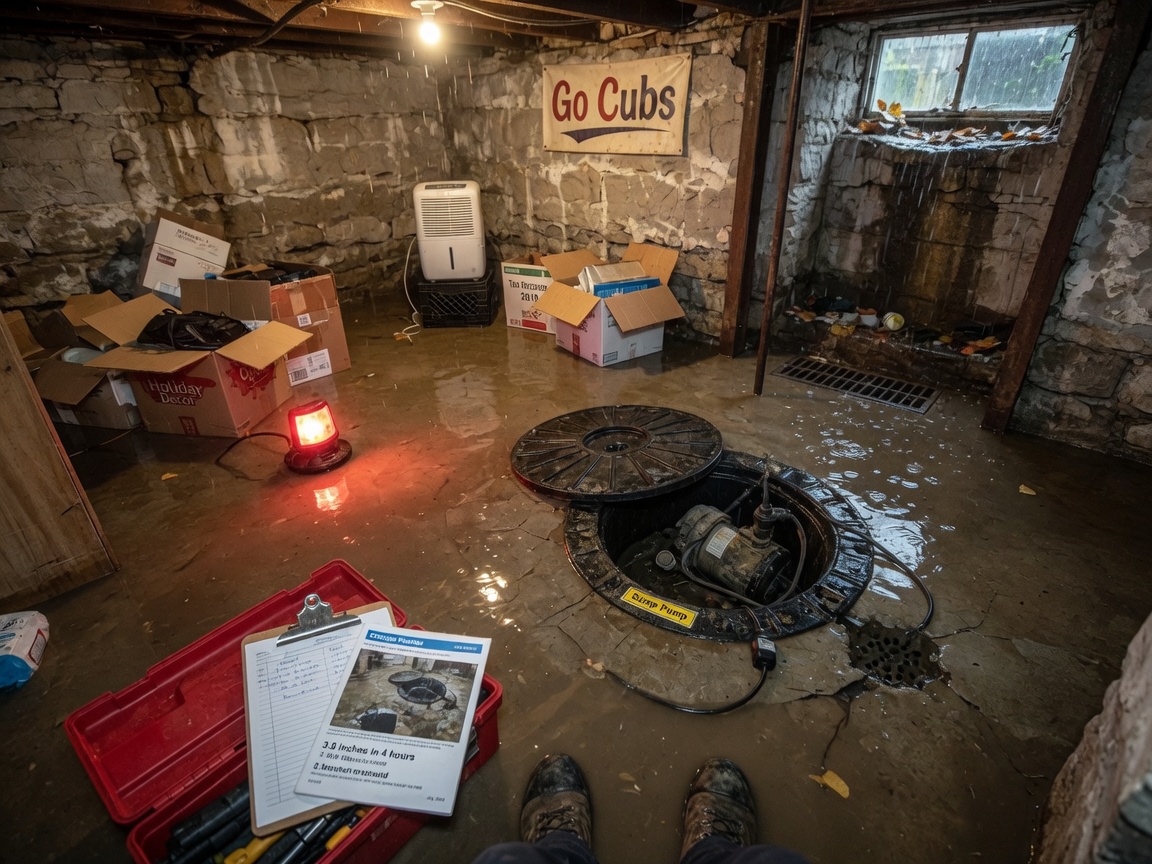
After heavy Chicago rain, contact an emergency plumber if the sump pump fails to lower the water level in the basin below the activation switch within 30 minutes or if standing water reaches 4 inches above the normal high mark. This threshold prevents basement flooding in Cook County homes where clay soil and high water tables amplify runoff.
Recognizing Sump Pump Failure Signs After Rain
Chicago storms dump several inches in hours, and older homes in Lincoln Park or Wicker Park often see water enter basements faster than a single pump can handle. Listen for the motor running continuously without shutting off, or notice the unit cycling on and off every few minutes. Check the discharge pipe outside for flow; absence of water during active rain indicates blockage or power loss. In Lakeview and Logan Square, tree roots and debris commonly clog outlet lines after prolonged wet periods. Homeowners should also watch for unusual noises like grinding or humming that signal impeller wear after years of service in humid continental conditions.
How Chicago Weather Patterns Trigger Failures
The region's humid continental climate brings sudden downpours in spring and fall plus rapid freeze-thaw cycles in winter that crack discharge lines. When temperatures drop below freezing, ice can block pipes leading from basements in Hyde Park and Andersonville. Heavy summer rains overwhelm systems in West Loop and South Loop buildings where older foundations sit close to the Chicago River. These patterns mean pumps installed 8–12 years ago frequently reach the end of reliable service exactly when storms hit hardest. Monitoring local forecasts helps residents anticipate when to test units before rain arrives.
Neighborhood-Specific Basement Risks
Homes in Uptown and Rogers Park face lake-effect moisture that keeps soil saturated longer, increasing pressure on sump pits. Bridgeport and Pilsen properties often have shallow foundations that direct street runoff directly toward basements during cloudbursts. Logan Square and West Loop conversions from commercial to residential use sometimes retain outdated plumbing that lacks modern check valves. These local conditions turn minor pump issues into full backups within 1–2 hours of sustained rain. Residents near Millennium Park or the Chicago Riverwalk report faster water entry due to combined sewer systems that back up under high volume.
When to Contact 24/7 Emergency Response
Call Speedy Plumbing Chicago immediately if water rises despite the pump running, or if the unit shows no power after checking the outlet and breaker. In nearby Evanston and Oak Park, similar soil conditions produce the same rapid flooding, so same-day service prevents thousands in damage. Technicians can assess float switch failure, motor burnout, or frozen lines on site. Delaying beyond the first signs often leads to sewage mixing with stormwater, requiring more extensive cleanup. The 24/7 emergency response ensures crews reach properties in Rogers Park or Pilsen within the critical window before water damages flooring or walls.
Next Steps and Related Guidance
Test the pump monthly by pouring water into the pit and confirm the switch activates at the proper level. Clear debris from the inlet and check that the discharge line slopes away from the foundation. For deeper issues, review sump pump services and consider emergency sump pump repair options. Homeowners dealing with combined backups should also read what to do when sewage backs up during heavy Chicago storms for additional context on storm-related failures.