
2026-09-12 ·
Fixing Running Toilets After Chicago's Hard Water Season
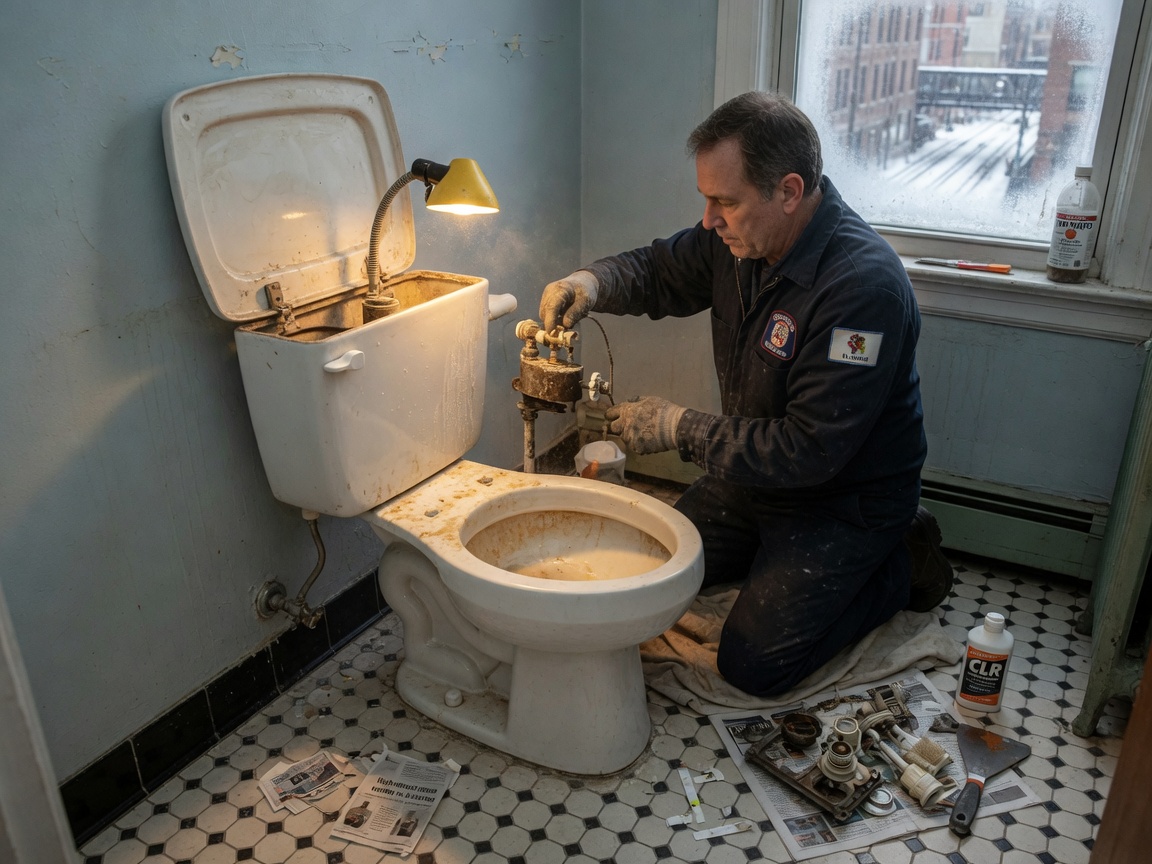
A running toilet after Chicago's hard water season is typically resolved by cleaning the flush valve seat and replacing the flapper, which restores proper sealing in 20-45 minutes for accessible units in most Cook County homes.
Hard Water Buildup from Chicago Winters
Chicago's humid continental climate brings cold winters that increase indoor water use while Lake Michigan supplies water high in calcium and magnesium. These minerals precipitate onto rubber flappers and valve seats during the heating season, creating a crust that prevents a tight seal once temperatures rise. Homes in Lincoln Park and Wicker Park, many built before 1940 with original fixtures, show faster accumulation because older toilet designs have narrower flush passages. Residents in Evanston and Oak Park report the same pattern in bungalows where winter boiler use concentrates the deposits. The result is a constant trickle that wastes 200-600 gallons monthly until the seal is restored.
Signs Specific to Post-Winter Toilets
Look for a faint hissing sound that starts after the tank refills and a faint white film on the flapper underside. In Logan Square and Uptown apartments, the chain may also shorten from scale, holding the flapper open. Check the overflow tube for mineral rings at the water line; if the ring sits above the normal fill level, evaporation from the leak has concentrated more solids. These clues appear most often in March and April when households switch from heating to cooling and run more cold water through fixtures.
Step-by-Step Mineral Removal Process
Turn off the water supply and flush the tank empty. Soak the flapper and valve seat with white vinegar for 15 minutes, then scrub with a non-scratch pad to remove the scale without damaging rubber. Replace the flapper with a 3-inch universal model rated for hard water; these last 3-5 years in Chicago conditions versus 8-12 months for standard ones. If the seat itself is pitted, install a new flush valve assembly rather than attempting further cleaning. Test the seal by adding food coloring to the tank and checking the bowl after 20 minutes for color transfer.
When Professional Help Is Needed
Older cast-iron or galvanized supply lines common in Bridgeport and Pilsen homes can restrict flow enough that a new flapper alone fails to stop the leak. In those cases, a full Toilet Repair & Installation addresses both the fixture and any upstream mineral restriction. For multi-unit buildings in the West Loop or South Loop, shutoff valves may be corroded and require Leak Detection & Repair before the toilet can be serviced safely. Homeowners in Rogers Park and Andersonville often combine this work with a full plumbing inspection to catch similar buildup in other fixtures before summer humidity increases.
Preventing Repeat Issues in Chicago Homes
Install a point-of-use water softener on the toilet supply line if the home draws from the municipal system without whole-house treatment. In Hyde Park and Grant Park area high-rises, annual flapper checks before November reduce winter-scale problems. Keep a spare hard-water-rated flapper on hand; the 24/7 Emergency Response team at Speedy Plumbing Chicago stocks them for same-day visits when a leak escalates to overflow. Regular attention to these small components prevents larger water waste during the next cold season.