
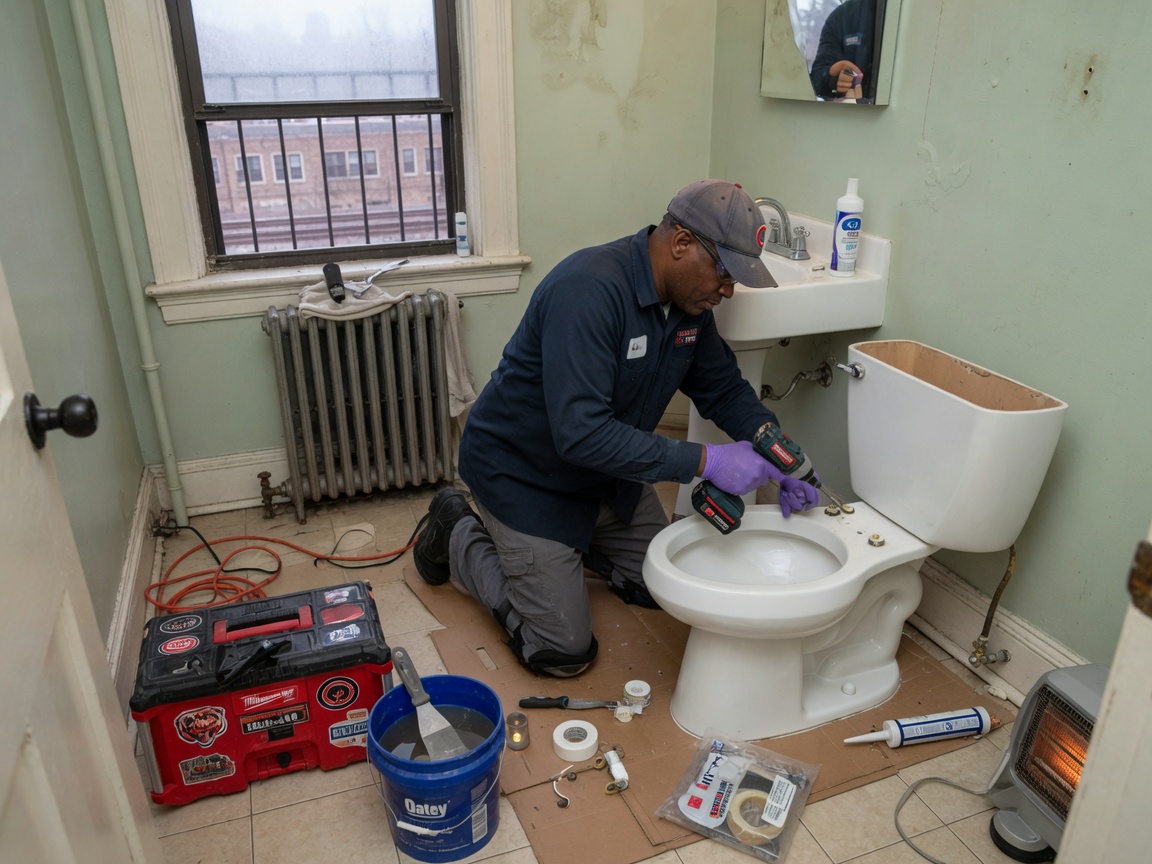
Chicago’s older housing stock in neighborhoods like Wicker Park and Bridgeport often features cast-iron waste lines and narrow floor joists that complicate toilet bowl swaps. A technician must check the flange condition and wax ring seal before setting a new unit, because settling from the area’s clay-heavy soil can tilt the base and create slow leaks. In winter, when temperatures drop sharply under the humid continental pattern, supply lines behind exterior walls in Rogers Park and Uptown can freeze and burst, sending water across bathroom floors.
During humid summers, condensation on cold supply pipes in South Loop high-rises feeds mold around the base of floor-mounted toilets. Technicians carry both 3-inch and 4-inch offset flanges to handle the out-of-level subfloors common in pre-war buildings near the Chicago Riverwalk. Local code in Cook County requires a shutoff valve within reach of every fixture, so crews verify or add an angle stop during every replacement to prevent future emergency calls.
Homeowners in Evanston and Oak Park frequently request bidet conversions on existing two-piece toilets. The added weight and new water line routing must clear the joist bays without cutting structural members. Speedy Plumbing carries low-flow 1.28-gallon models that meet current efficiency rules while fitting the smaller footprint of many Logan Square and Andersonville bathrooms.
When a flush valve fails in a high-traffic commercial space near Navy Pier, the repair often involves replacing the entire tank-to-bowl gasket and adjusting the fill valve height to match older wall-mounted tanks still found in some Uptown buildings.
Technician insight
In Chicago, the thing that catches most people out with Toilet Repair & Installation is the combination of settling clay soil and narrow joist bays in 1920s–1940s brick two-flats across Wicker Park and Logan Square. The flange often sits out of level, so a standard wax ring fails within months unless we shim or replace it with an offset model.
Slow Leak After Freeze in Rogers Park Two-Flat
A homeowner in a 1930s Rogers Park two-flat noticed water staining the ceiling below after a January cold snap. We found the supply line had split behind the wall and the original flange had cracked from repeated freeze-thaw cycles. We replaced the line, installed a new offset flange and low-flow toilet, and added an accessible shutoff valve to meet code.
Toilet Repair & Installation Services We Offer
✓Clogged Toilet Clearing
Power-snake and hydro-jetting clear blockages in older cast-iron lines common throughout Lincoln Park and Hyde Park without damaging fragile pipes.
✓Toilet Leak Repair
Replace worn wax rings, flange bolts, and supply lines to stop leaks at the floor in settling brick homes found in Wicker Park and Pilsen.
✓Flush Valve Replacement
Install new flush valves and flappers that restore reliable operation in two-piece toilets typical of pre-1960s construction in Logan Square.
✓New Toilet Installation
Set and seal low-flow or dual-flush models on existing or repaired flanges, including new shutoff valves required by Cook County code.
✓Bidet Attachment Installation
Route dedicated supply lines and mount bidet seats or conversion kits without cutting floor joists in older West Loop and South Loop apartments.
✓Tank-to-Bowl Gasket Service
Replace leaking tank-to-bowl gaskets and hardware on wall-hung and floor-mounted units still present in Uptown and Andersonville buildings.
Toilet Repair & Installation Cost in Chicago, IL
| Service | Typical Range | What Affects It |
|---|---|---|
| Clogged Toilet Clearing | $125–$275 | Higher when hydro-jetting is required on older cast-iron lines. |
| Toilet Leak Repair | $150–$350 | Varies with flange replacement and floor access in pre-war homes. |
| Flush Valve Replacement | $175–$325 | Includes parts and labor on standard two-piece models. |
| New Toilet Installation | $350–$650 | Includes fixture, valve, and haul-away; rises with custom height or bidet models. |
Ranges are typical for Chicago, IL and confirmed with an exact written quote before any work starts.
How it works
- 1
Arrival And Safety Shutoff
Technician arrives within the 24/7 window, locates the main or angle stop, and protects flooring before any work begins.
- 2
Diagnosis And Flange Check
Inspect the existing flange, waste line material, and floor level to determine whether repair or full replacement is required.
- 3
Parts Selection And Code Update
Select compliant low-flow fixture and add or confirm a shutoff valve within reach per local Cook County requirements.
- 4
Set, Seal, And Test
Install the new unit, apply fresh wax ring or gasket, connect supply, and run multiple flush cycles to verify no leaks.
Pricing
Upfront quotes provided on site after inspection; final price depends on flange condition and line access in older buildings.