
2026-09-12 ·
How Chicago's Old Sewer Lines Affect Home Plumbing
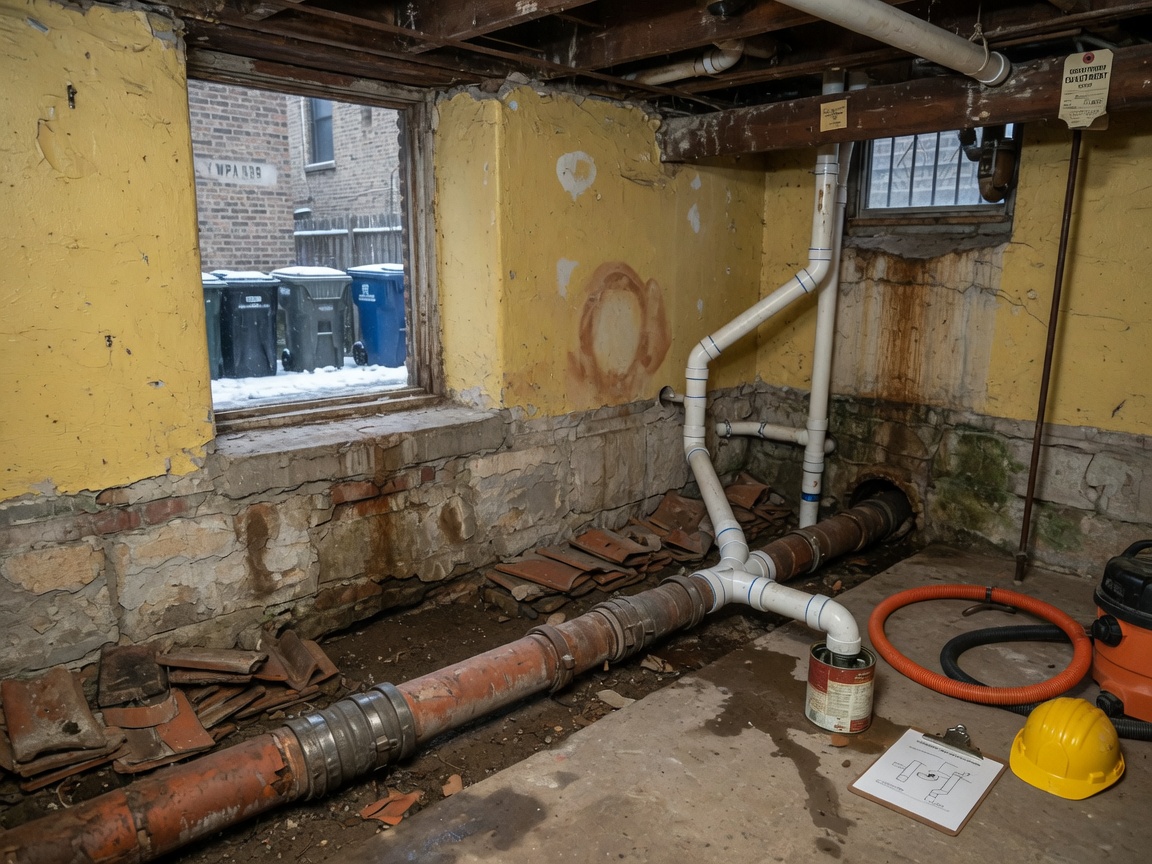
Chicago's sewer lines, many installed before 1940 with clay or cast iron, frequently lead to backups, root intrusion, and collapses that disrupt home plumbing in neighborhoods such as Lincoln Park, Wicker Park, and Bridgeport. These aging mains and laterals allow groundwater infiltration and debris buildup that push waste back into basements and lower-level fixtures during heavy flows.
Historical Materials and Their Lifespans
Chicago homes built in the early 20th century typically connect to clay tile or cast-iron sewer laterals that were expected to last 50 to 70 years under normal conditions. In Cook County, many of these lines now exceed that range, with joints separating and walls thinning from decades of exposure to Chicago's humid continental climate. Cold winters expand and contract the pipes while summer heat accelerates corrosion in cast iron. The result shows up as slow drains first, then full blockages that affect toilets and showers simultaneously. Property owners in older stock near the Chicago Riverwalk or Grant Park see these issues more often because the original infrastructure was laid before modern compaction standards. When roots from street trees exploit the failing joints, the problem moves from the main line into the home's branch piping within weeks.
Root Intrusion and Blockage Patterns
Tree roots seek moisture in Chicago's dense clay soils and readily penetrate the cracks that develop in 80-year-old sewer lines. Neighborhoods such as Logan Square and Andersonville report frequent root-related backups because mature maples and elms line many streets. Once roots enter, they trap grease, wipes, and sediment, narrowing the pipe until flow stops. This creates pressure that can crack home traps or force water through floor drains. In South Loop and West Loop conversions, the added load from multi-unit buildings accelerates the same process. Homeowners notice gurgling at fixtures or sewage odors near basement cleanouts long before a complete stoppage occurs. Regular camera inspections reveal the extent before an emergency forces excavation.
Seasonal Climate Impacts on Sewer Performance
Chicago's cold winters freeze shallow laterals in older blocks of Uptown and Rogers Park, causing contraction cracks that allow inflow during spring thaws. Heavy rains then overwhelm the combined sewer system, backing water into homes where laterals already have reduced capacity. Hot, humid summers increase bacterial activity inside cast-iron pipes, speeding corrosion. These patterns mean plumbing issues spike after major storms or prolonged freezes rather than spreading evenly through the year. Properties near Navy Pier or Millennium Park experience the same seasonal pressure because the underlying mains were sized for lower population densities than today's density.
When Failures Reach Interior Plumbing
Once a main sewer line collapses or blocks, the effects travel upstream into home systems through shared laterals. Toilets lose flush power, showers back up, and floor drains emit odors. In Pilsen and Bridgeport bungalows, the original 4-inch clay lines often cannot handle modern water use, so even minor root growth triggers widespread fixture problems. Sewer line services and sewer drain inspection help identify the exact location and material before damage spreads to interior stacks. Trenchless sewer repair options preserve landscaping in dense blocks where traditional digging would disturb neighboring foundations. Related reading on pressure changes appears in what causes low water pressure in Chicago apartments.
Practical Response for Cook County Homeowners
Homeowners in Evanston and Oak Park border areas face similar line conditions when their laterals tie into Chicago mains. Documenting slow drains early, avoiding chemical cleaners that weaken old joints, and scheduling camera inspections after major weather events reduce the chance of sudden backups. When sewage appears in basements, immediate isolation of fixtures prevents further contamination while waiting for 24/7 response crews. These steps address the root infrastructure issues rather than repeated symptom fixes.