
2026-09-12 ·
Detecting Hidden Leaks Under Chicago Bathroom Floors
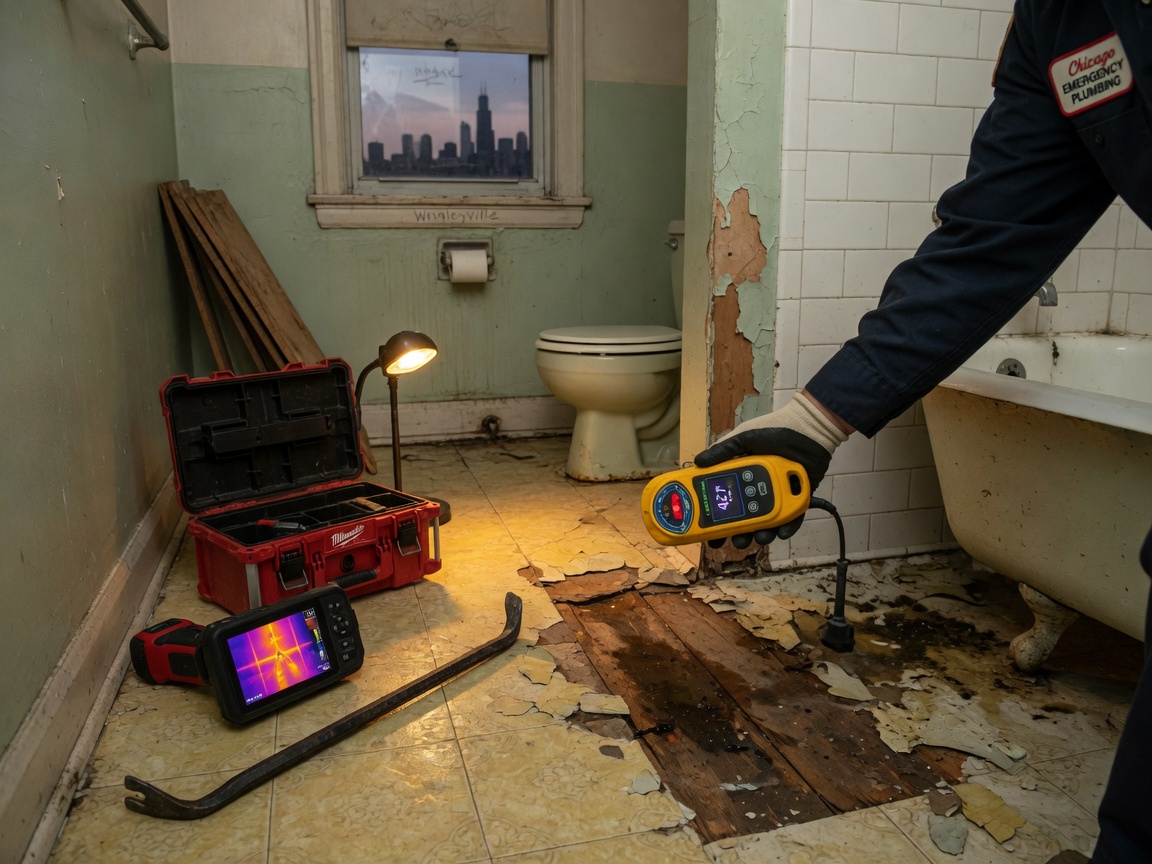
Hidden leaks under Chicago bathroom floors typically reveal themselves through soft spots in subflooring or ceiling stains below after 3–6 weeks of slow seepage, especially in pre-1960 homes common across Lincoln Park and Wicker Park where cast iron pipes meet humid continental winters.
Visible and Sensory Signs in Chicago Bathrooms
Warped or buckling vinyl and hardwood around toilets and tubs appears first in older buildings throughout Logan Square and Uptown. Musty odors that intensify after showers signal trapped moisture between the tile and joists, a frequent issue when summer humidity meets winter pipe contraction in Cook County. Discolored grout lines that darken without visible standing water often trace back to hairline cracks in supply lines feeding 40- to 60-gallon water heaters typical in these neighborhoods. Residents in nearby Evanston and Oak Park report similar patterns in two-flat conversions where original plumbing runs under bathroom floors without modern shutoff valves.
How Chicago Climate and Housing Stock Contribute
Hot summers followed by sub-zero winters cause repeated expansion and contraction that stresses soldered joints under bathroom floors in Hyde Park and Bridgeport brick buildings. Many homes built between 1920 and 1950 still rely on galvanized steel lines that corrode from the inside, allowing slow drips that soak into oak subfloors before any surface water appears. Soil conditions around the Chicago River and Lake Michigan add minor settling that shifts pipe alignments over decades, increasing leak likelihood in South Loop and Pilsen properties. These factors make early detection critical before mold sets in during the humid months.
Step-by-Step Detection Process for Homeowners
Turn off the main water supply at the meter for 30 minutes and monitor the lowest bathroom floor for any moisture return using a moisture meter on the tile. Check the ceiling directly below for yellow-brown rings that indicate seepage from above, common in multi-story structures in West Loop and Andersonville. Listen for faint dripping sounds after running the shower for five minutes with all fixtures closed, then inspect the base of the toilet with a flashlight for hairline cracks in the wax ring area. Document any temperature differences across the floor with an infrared thermometer, as cooler spots often mark active leaks in older cast-iron stacks.
When Professional Tools Become Necessary
Acoustic listening devices and video inspection cameras locate leaks behind tile without demolition, especially useful in high-rise conversions near Millennium Park and Navy Pier where access is limited. Thermal imaging reveals moisture patterns invisible to the eye in homes across Rogers Park and Lakeview where multiple remodels have layered new flooring over original pipes. Leak detection services combined with targeted pipe repair prevent full floor replacement. Homeowners noticing sudden drops in pressure should also review what causes low water pressure in Chicago apartments for related issues. Speedy Plumbing Chicago maintains 24/7 emergency response for these situations.
Preventing Further Damage After Detection
Isolate the affected supply line immediately and avoid running water until a technician arrives to avoid saturating joists in older frame homes. Place fans and dehumidifiers on the floor to reduce moisture while waiting, but do not attempt to dry hidden areas yourself as trapped water leads to structural rot. Schedule a follow-up inspection after repair to confirm no residual dampness remains under the subfloor, particularly before winter freeze cycles begin.