
2026-09-12 ·
Cost Breakdown for Water Heater Replacement in Chicago
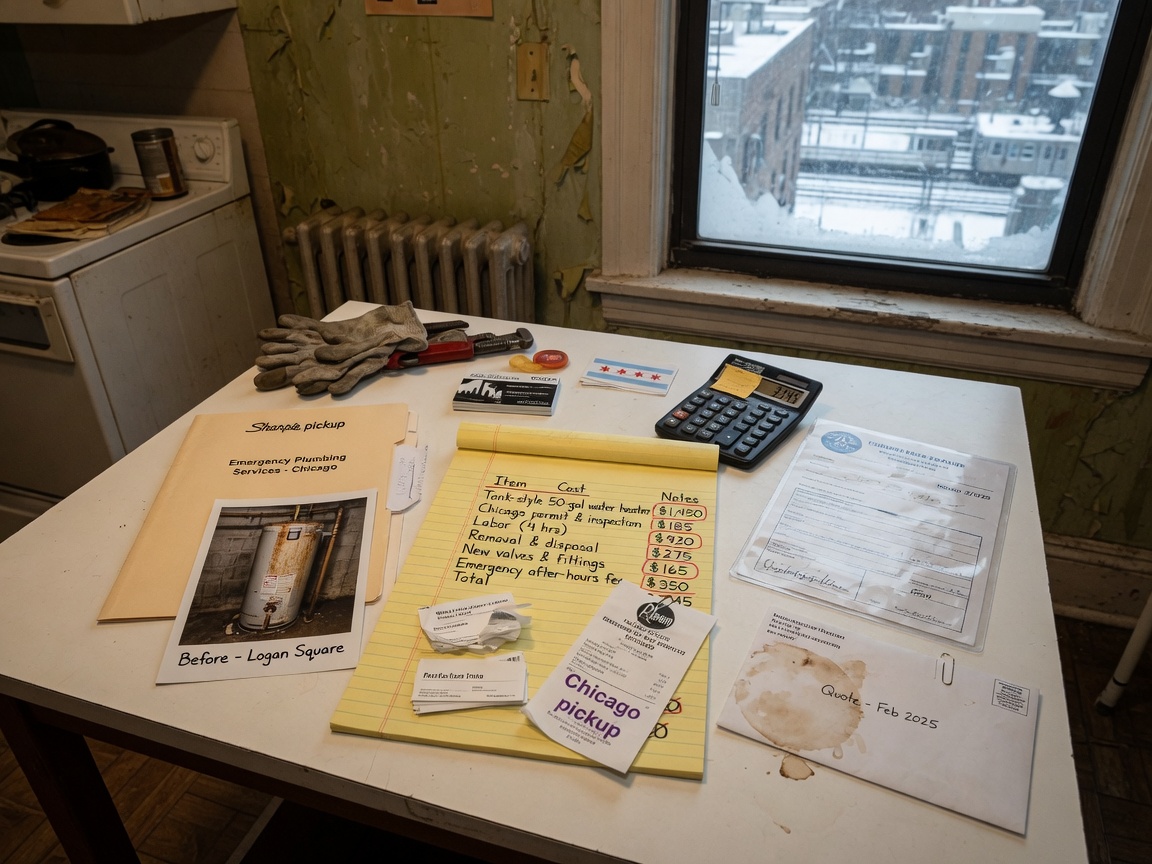
Water heater replacement in Chicago runs $1,200 to $3,800 for most residential jobs. Tank-style units average $1,200 to $2,400 installed while tankless models start at $2,800 and climb past $3,800 when venting and gas line upgrades are required. These figures cover standard 40- to 50-gallon gas units in single-family homes and two-flats across Cook County.
Standard Cost Ranges for Tank and Tankless Units
A 40-gallon gas tank replacement in a Lincoln Park two-flat usually lands between $1,400 and $2,100 when the existing connections are accessible. Electric units cost $200 to $400 less on materials but add electrical work that can push totals to $1,800. Tankless models require $2,800 to $3,800 because of the need for larger gas lines and stainless venting. In older Wicker Park buildings, plumbers often discover 3/4-inch gas lines that must be upsized, adding $600 to $900. Homeowners in Lakeview and Logan Square report similar numbers when replacing units that failed after 10 to 12 years of service. These ranges reflect current material prices and typical labor for one-day jobs in neighborhoods with standard basement or first-floor mechanical rooms.
Labor, Materials, and Permit Breakdown
Labor accounts for $450 to $750 of the total bill on most Chicago jobs. Two technicians spend four to six hours removing the old unit, setting the new one, and testing for leaks and combustion. Materials beyond the heater itself include a new expansion tank, dielectric unions, and seismic strapping that add $180 to $280. Permits through the City of Chicago run $75 to $150 depending on the district. In Hyde Park and Bridgeport, older clay sewer laterals sometimes require extra camera work before final sign-off, increasing the permit-related portion by $200. Speedy Plumbing Chicago handles these steps as part of every replacement so homeowners see one clear invoice rather than surprise add-ons.
How Chicago Housing Stock Changes the Job
Many homes in Andersonville, Uptown, and Rogers Park date to 1890-1920 and still use galvanized or early copper supply lines. Replacing a water heater in these buildings often requires cutting into walls or ceilings to reach corroded shut-off valves, adding two to four hours of labor. South Loop and West Loop high-rises present different challenges: units sit in tight utility closets with limited access, so technicians must disassemble sections of cabinetry. In Pilsen and Bridgeport bungalows, low basement ceilings force the use of shorter water heaters or horizontal models that cost $300 more. These realities explain why quotes vary even when the same heater model is specified.
Climate and Seasonal Factors in Cook County
Chicago's humid continental climate brings cold winters that increase demand on water heaters from November through March. Frozen pipes in unheated basements or exterior walls can crack supply lines and force emergency replacements. Homeowners who follow guidance in Winterizing Outdoor Faucets Before Chicago's First Freeze reduce the chance of related failures. Hot, humid summers raise incoming water temperature, which shortens recovery time but accelerates sediment buildup in tanks. This seasonal pattern means many units reach the end of their 8- to 12-year lifespan during peak winter demand, when 24/7 Emergency Response teams see the highest call volume.
When Replacement Becomes Necessary
Rust-colored water, popping sounds, and inconsistent temperatures signal the end of a unit's life. Leaks at the base or pressure-relief valve require immediate attention to avoid flooding in finished basements common throughout Logan Square and West Loop. Regular maintenance through Water Heater Services can extend life by two to three years, but once the tank shows internal corrosion, replacement is the only reliable fix. Technicians evaluate venting, gas pressure, and seismic requirements on every call so the new unit meets current code without future issues.
Planning Your Replacement in Chicago
Obtain itemized quotes that separate the heater, labor, permits, and any required line upgrades. Schedule non-emergency work during shoulder seasons when demand is lower and lead times are shorter. For after-hours failures, contact Speedy Plumbing Chicago at their 24/7 Emergency Response number so a licensed plumber reaches the property within two hours. Proper sizing based on household occupancy and simultaneous fixture use prevents short cycling and premature wear in the new unit.