
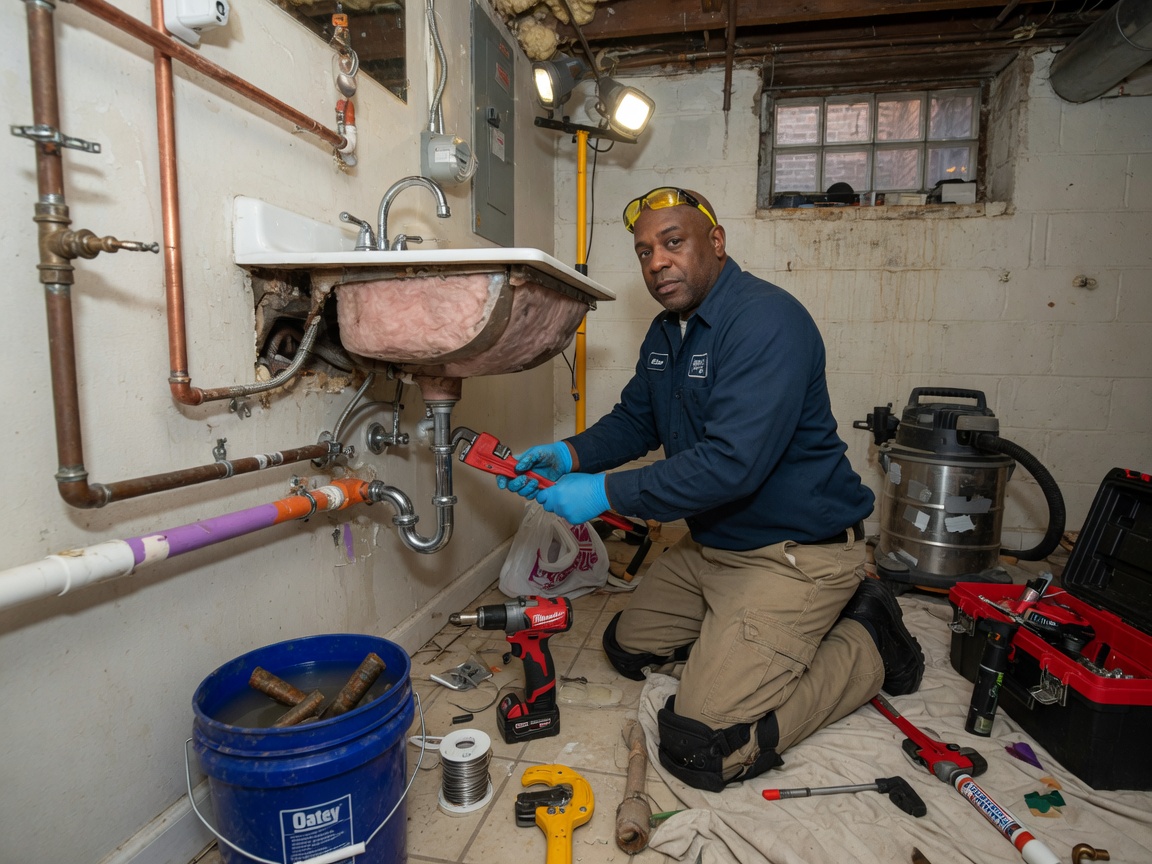
Chicago's older housing stock in neighborhoods like Lincoln Park, Wicker Park and Logan Square often features galvanized steel or cast-iron lines installed decades ago. These materials corrode faster under the city's humid continental climate where summer humidity and winter freezes stress joints. Technicians see pinhole leaks appear most often at elbows and tees where water sits during cold snaps below freezing.
In South Loop and West Loop high-rises converted from industrial buildings, PVC and copper transitions create galvanic corrosion points that fail under pressure spikes common after city main work. Homeowners in Bridgeport and Pilsen frequently encounter slab leaks because soil movement from the Chicago River and heavy clay expands and contracts with seasonal moisture. Proper isolation valves and camera location before opening walls prevent unnecessary demolition in these tight row-house layouts.
Cook County code requires backflow prevention on any new fixture installation and permits for repiping work. Technicians carry extra shark-bite and press-fit fittings for quick emergency swaps in Uptown and Andersonville apartments where access is limited. Hot summers increase demand on water heaters while winter pipe bursts in unheated Rogers Park basements remain the leading after-hours call type.
Technician insight
In Chicago the thing that catches most people out with Residential Plumbing is the mix of 1920s galvanized lines and 1970s copper in the same house, especially in Lincoln Park and Wicker Park. One winter freeze can split the old steel while the newer copper holds, so we always scope both directions before quoting a repair.
Winter Burst in Logan Square Two-Flat
A tenant reported water in the basement after a cold snap. We found a split galvanized elbow on the main line feeding the second floor. The repair required isolating the unit, cutting out three feet of pipe and installing PEX with press fittings to avoid disturbing finished ceilings. Water was restored within four hours.
Residential Plumbing Services We Offer
✓Clogged Drain Clearing
Camera inspection and hydro-jetting for kitchen and bath drains common in older Chicago homes where grease and paper buildup meets aging clay or cast-iron lines.
✓Pipe Leak Repair
Spot repair or repipe of copper, PEX and galvanized lines in Lincoln Park and Hyde Park row houses where corrosion leaks appear at joints during winter temperature swings.
✓Fixture Installation
Replacement of sinks, faucets and toilets with code-compliant backflow devices in Wicker Park and Logan Square properties that have mixed plumbing materials from multiple renovations.
✓Slab Leak Detection
Electronic listening and thermal imaging to locate leaks under concrete slabs in South Loop and Bridgeport homes without tearing up finished floors.
✓Sump Pump Installation
Battery backup sump pump systems for basements in Lakeview and Uptown where high water table and heavy rains overwhelm older gravity drains.
Residential Plumbing Cost in Chicago, IL
| Service | Typical Range | What Affects It |
|---|---|---|
| Drain Clearing | $225–$475 | Higher in multi-story homes or when hydro-jetting is required |
| Pipe Leak Repair | $350–$850 | Depends on wall or slab access and pipe material |
| Fixture Replacement | $275–$650 | Includes new shutoff valves and code backflow device |
| Sump Pump Install | $650–$1,200 | Battery backup adds cost; older homes may need basin modification |
Ranges are typical for Chicago, IL and confirmed with an exact written quote before any work starts.
How it works
- 1
Call Intake
Dispatcher gathers address, symptoms and access details while routing the nearest technician from our 24/7 roster.
- 2
On-Site Diagnosis
Technician performs visual and camera inspection, isolates the issue and explains findings before any work begins.
- 3
Repair Execution
Parts are pulled from the truck stock or sourced locally; repairs follow current Cook County plumbing code.
- 4
System Test And Cleanup
Lines are pressure tested, fixtures operated and work area restored before departure.
Pricing
Most residential calls fall into diagnostic, repair or replacement categories with price driven by access difficulty and material age.